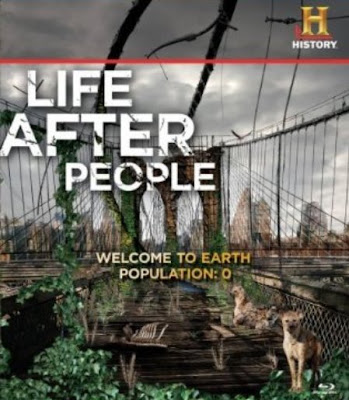
In the program, scientists and other experts speculate about what the Earth, animal life, and plant life might be like if, suddenly, humanity no longer existed, as well as the effect humanity's disappearance might have on the artificial aspects of civilization.

Speculation is based upon: documented results of the sudden removal of humans from a geographical area and the possible results that would occur if humanity discontinues its maintenance of buildings and urban infrastructure.

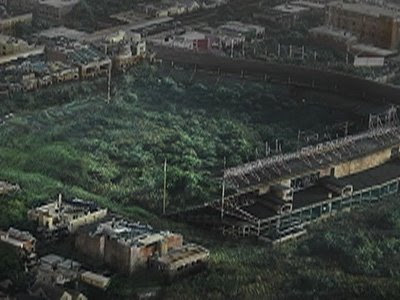
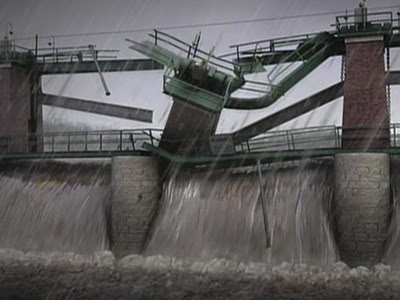
The documentary features the gradual and post-apocalyptic disintegration of urban civilization in a time span of 10,000 years after humanity suddenly vanished. The hypotheses are depicted using CGI dramatizations of the possible fate of iconic structures and landmarks (i.e. the Empire State Building, the Sears Tower, the Space Needle, the Eiffel Tower, the Golden Gate Bridge, and the Hoover Dam).

With an audience of 5.4 million viewers, Life After People was the most watched program ever on the History Channel.

| Time Period | Predictions |
|---|---|
| 1 day | Fossil fuel fired power plants, which are largely automated, would remain running for a few hours until their fuel supplies are depleted. Within hours, lights would begin going out all over the world as electrical systems start failing. Almost all fossil fuel plants would shut down within a couple of days. |
| 2 days | After 48 hours, nuclear power plants will automatically enter safe mode due to reduced power consumption, thereby averting meltdowns. Wind turbines will eventually cease to operate when their lubrication fails. Eventually, only areas powered by hydroelectric dams and solar panels will have electricity. |
| 3 days | Subway systems like the New York City Subway require pumps to keep out the groundwater. Without humans to maintain the system, many parts of the subway will be flooded within 36 hours. |
| 10 days | Food would begin to rot in grocery stores and in refrigerators. While melted water from freezers or food on countertops could provide temporary sustenance, pets would soon need to leave their owners' houses to avoid death from starvation. Those which managed to leave homes would have to compete for food. Dogs and cats that were bred by humans for appearance would have no niche in this new competitive environment and will be among the first to die. For example, the short legs and small mouths of bulldogs or terriers will be handicaps for them. Zoo animals who haven't gotten out of the pens that held them would die of thirst and hunger. Large animals like elephants and lions would get out of their pens. |
| 6 months | Smaller forms of wildlife not normally seen in civilization, like coyotes and bobcats, would begin to inhabit suburban areas. Deer would also begin grazing in neighborhoods as well. Rats and mice will have by now consumed our edible supplies and are leaving urban areas to return into the wild. |
| 1 year | Plants would begin to sprout within the cracks in streets, highways, sidewalks, and buildings. The Hoover Dam would stop generating power as mussels clog coolant pipes. Therefore, one of the last areas with some artificial illumination, in Las Vegas, Nevada, would finally plunge into darkness. As flow of water through the dam stops, the Colorado River downstream from the dam would temporarily dry up until the level of Lake Mead reaches the spillways around the dam. Wildfires caused by lightning would rage uncontrolled in cities such as San Francisco, Chicago, and Rome. Animals would start to notice human absence and start to flourish in cities. The final radio and television signals of Humanity, which have been traveling through outer space have now deteriorated into undetectable background radiation, according to scientists of the SETI project. |
| 5 years | Plant life will have covered many surfaces in urban areas with vines, grasses, and tree saplings growing there. Roads will become overgrown with plant life, suffer from lack of maintenance, and disappear. |
| 20 years | The ruins of Prypiat, Ukraine, which were abandoned in 1986 due to the Chernobyl disaster, are used as an example for the level of decay which could happen after 20 years of humanity's disappearance. Despite high radiation levels, many animal populations have flourished significantly in areas where humans had left. Plants have grown in many structures that were once used by humans. |
| 25 years | Sea water floods into cities such as London and Amsterdam, which are currently kept dry by human-engineered projects. Windows in high rise buildings begin to crack and shatter due to the cycle of freezing and thawing and the decay of window sealants. Satellites, due to lack of recalibrations (or adjustments) would have fallen back to Earth. |
| 40 years | By this time, many wooden frame houses would have burnt down, rotted, or have been largely consumed by termites. Trees and vines grow into remaining brick and masonry elements, which would by now be weakened by salts. Compacted earth dams may begin to fail due to widening leaks. |
| 50 years | Steel structures, such as the Brooklyn Bridge, would start to show signs of strain from neglect. Paint that would normally protect these structures would peel off, exposing the steel to the elements and allowing corrosion to gradually weaken them. |
| 75 years | Many of the roughly 600 million automobiles on earth would be reduced to barely recognizable metal. Some automobiles in arid climates would not have suffered the effects of corrosion as severely and would still be recognizable. While the rubber tires of cars would have deflated years ago, they would not decompose for centuries. |
| 100 years | Large bridges such as the Golden Gate Bridge and the Brooklyn Bridge would collapse due to corrosion of support cables. Many human-built structures would fall during the 100- to 10,000-year period. |
| 150 years | Many streets with subways would start to collapse into flooded tunnels below. Many large buildings are completely colonized by plants and animals and resemble a wild landscape, creating somewhat of a "vertical ecosystem". Descendants of Domestic dogs that went wild had bred with wolves. |
| 200 years | Large structures such as the Empire State Building, Sears Tower, Space Needle, and Eiffel Tower would collapse due to corrosion, invasive plant life, and ground water destabilizing their foundations. Also all of mankind videos, and books fade away thanks to mold. The only exception is the Dead Sea Scrolls, but this is a rare exception. |
| 500 years | Items made with modern concrete would give way as the steel rebar reinforcing them rusts and expands to three times its normal size. |
| 1000 years | Most modern cities would be destroyed and/or covered in flora, with collapsed and fallen skyscrapers becoming new mounds and hills. Manhattan would appear much as it did before human settlement, with old streams and bodies of waters returning. There would be little evidence that a human civilization existed on earth. Certain structures made out of thick rock or concrete, like the Egyptian Pyramids or the Hoover Dam, might survive with minimal damage. |
| 10,000 years | The Hoover Dam, one of the last remnants of advanced civilization, would fail due to erosion of its concrete and the cumulative effect of seismic activity. By this point, any substantial evidence of humanity's former domination over nature would be gone. Only a few things would survive, such as the solid granite and concrete pedestal of the Statue of Liberty. The Pyramids at Giza remain, but would be mostly buried by the Sahara Desert's sands. Portions of the Great Wall of China may also remain intact. The faces at Mount Rushmore might also survive and remain recognizable for hundreds of thousands of years. Our bones, rubber, plastic, and polystyrene (polystyrene is also called Styrofoam) might be the last remnants of humanity. |
| Animal | Prediction |
|---|---|
| Dogs | Domestic dogs which are not trapped in their owners' homes will survive at least temporarily in the wild. Smaller and specialized breeds such as the pug, bulldog, or pekingese will likely be less able to compete successfully with medium sized dogs. Small predators such as coyotes, foxes, and bobcats, which live on the periphery of civilization, may quickly become competitors to dogs. As urban areas revert to their natural states, larger predators such as bears and cougars will return. Wolves could increase in population very rapidly to become the new dominant predator species in North America, as they were prior to European settlement. Some large domestic dogs may be accepted into wolf packs and breed with wolves. Eventually, dogs may completely revert into their wolf ancestors. |
| Domestic cats | As large buildings are colonized by plants, animals such as birds and mice will follow. Domestic cats may follow them as predators, and imaginative evolutionary paths could result, such as some living their entire lives in former skyscrapers or even developing the capability to glide short distances like flying squirrels. |
| Zoo animals | Some animals held in zoos may escape their confinement and establish populations in areas outside of their native ranges such as lions, tigers, kangaroos, camels, yaks, or elephants in North America or macaques in the Caribbean.Many will adapt in the new biology range. For example, Elephants that escaped from North America's zoos will fill the ecological niches that mammoths and mastodons left vacant at the end of the last ice age. |
| Terrestrial wildlife | Wildlife in North America and other parts of the world which is currently hemmed into small spaces due to highways will be able to roam over larger areas in search of food and mating opportunities. Large historic migrations may resume.But some native animals and plants in places with invasive species will still suffer because of the invasive speciev species. |
| Seagulls | Seagulls that eat food found in landfills will quickly starve, causing a population collapse. The population will stabilize as survivors return to their traditional niche of eating fish from the ocean. |
| Fish/sea creatures | Pollution and overfishing will cease. Life in the ocean will quickly rebound to levels before consumption by humans. As evidence, the show cites the recovery of fish stocks in the North Atlantic Ocean during World War II when commercial fishing was impossible. Aquarium creatures will die, first water breathers like fish because of lack of oxygen that can only be pumped into the tanks, then air beathers because of food lack. |
| Rats/mice | Since mice eat the leftovers of humans, they will devour most of the remaining human food on earth. Once all human food is gone, the mice will return to the wild, where they will return to the bottom of the food chain, and the population will decrease. |
| Cockroaches | Cockroaches will devour available food and then move on to cardboard and paper. When they have exhausted these food supplies, they will return to eating seeds and other natural food items. Although cockroaches are native to tropical areas, they may survive in cold weather areas of the world by spending winters below ground. |
| Termites | Termites will destroy most of the remaining wooden structures in towns and cities within decades of humanity's disappearance before returning to the wild and eating dead trees. |
| Pigeons | Since pigeons have adapted equally well to life with humans and life in the wild, many of them will find food in the wild and leave the cities. Once trees cover the cities, the pigeons remaining will not need to leave the city. |
| Birds of prey | Birds of prey will build nests in abandoned buildings and hunt for small animals that live in cities. |
| Cattle | Dairy cows will starve without the help of humans. The udders of those cows that do make it will dry up, and they will evolve to resemble bison to an extent. Texas long horns will adjust rather quickly and roam the countryside in the millions. |
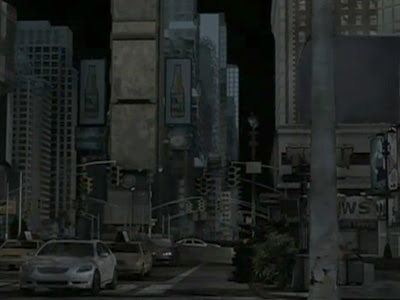
Life After People does not speculate about the cause or manner of humanity's sudden disappearance or depict potential immediate disasters such as crashing vehicles, or industrial or military malfunctions caused by lack of human oversight of machinery and computer systems. An exception is the series version (such as the episode "Armed and Defenseless," which examines the effect of military malfunctions due to lack of human oversight). The program does not mention artificial satellites, spacecraft, or human artifacts on the moon or on other bodies in the solar system, most notably the Pioneer 10 and 11 space probes, the Voyager 1 and 2 space probes, and the Mars rovers like Spirit and Opportunity. However, the Voyager probes, weather satellites and the International Space Station were addressed in the series version. Although these artifacts would, in theory, last indefinitely (barring meteoric impact), the series posits that meteoric impact would, in fact, significantly degrade the Voyager probes while the ISS and weather satellites would succumb in the Earth's atmosphere after a decaying orbit. The documentary film does not refer to the fate of certain human-made, durable, and non-biodegradable materials (and potential artifacts) like plastic, styrofoam, ceramic, marble, glass, and unreactive metal. Once again, these are addressed in the series version, which posits that it will take as many as thousands of years for polymer materials to degrade after exposure to UV rays. The special also does not mention radioactive waste and its impact on the "after-people" environment.

Aftermath: Population Zero (also titled Aftermath: The World After Humans) is a two-hour American special documentary film that premiered on Sunday, March 9, 2008 (at 8:00 PM ET/PT) on the National Geographic Channel. Similar to the History Channel's special Life After People, Aftermath features what scientists and others speculate the earth, animal life, and plant life might be like if humanity no longer existed, as well as the effect that humanity's disappearance would have on the artifacts of civilization.

As with Life After People, the similar special feature on the History Channel, Aftermath does not explain how humanity disappeared, but rather what would happen to the Earth after we disappeared. It also shows that humans have disappeared instantly, not a few at a time. Both series depicts the possible fates of famous pieces of infrastructure and buildings. It, too, uses CGI dramatizations to depict the possible fate of such icons as the Statue of Liberty and, in both programs, the Eiffel Tower and Hoover Dam. However, it does not emphasize this as much as Life After People does, following much more closely the effects on the natural world and its recovery after mankind departs the scene.


Also, Aftermath shows what would happen if a nuclear power plant's spent fuel rods are left without the cooling equipment governing its condition. Life After People suggest that nuclear power plants would safely shut down with no ill effects with no mention of what would happen to spent fuel rods in storage. Aftermath also shows that the nuclear power plants themselves would shut down without incident, but the spent fuel rod storage in separate buildings would eventually blow up and spread radiation into the air and the surrounding countryside after the backup safety devices fail, due to lack of fuel a few days after the main power plant supplying power shutdown. Life After People also does not mention the release of poisonous gas from chemical plants when their safety features fail, lacking the fuel to run them. Life After People does however talk about the Hoover Dam still generating power after people, but neither show talks about the things powered by batteries and solar power. Aftermath does not talk about the International Space Station. Life After People does not mention the moon, however in one of it's miniseries' episodes, a satellite is mentioned. Neither documentary mentions Spirit and Opportunity, the twin Mars rovers.

The Future Is Wild was a Canadian 2003 joint Animal Planet/ORF (Austria) and ZDF (Germany) co-production, which used computer-generated imagery to show the possible future of life on Earth.

Map of the potential layout of the future world (~200 million years hence)
The seven-part television series was released with a companion book written by geologist Dougal Dixon, author of several "anthropologies/zoologies of the future" such as After Man: A Zoology of the Future, in conjunction with natural history television producer John Adams.

Based on research and interviews with dozens of scientists, this documentary was put together to show how life could evolve in the future if Homo sapiens became extinct; the Discovery Channel broadcast softened the harsh outlook by stating the human race had completely migrated from the Earth and had sent back probes to examine the progress of life on Earth. The show was played out in the form of a nature documentary. For a time in 2005, a theme park based on this program was opened in Japan. In 2008, a special on the Discovery Channel about the development of the video game Spore was combined with airings of The Future Is Wild.
3 books that talk on the same topic:

After Man: A Zoology of the Future (1981) is a 1981 book by Dougal Dixon. In it, he presents his hypothesis on how the fauna and geography could change 50 million years from now.
.jpg)
The World Without Us is a non-fiction book about what would happen to the natural and built environment if humans suddenly disappeared, written by American journalist Alan Weisman and published by St. Martin's Thomas Dunne Books. It is a book-length expansion of Weisman's own February 2005 Discover article "Earth Without People".

The Earth After Us is a non-fiction book about the geological legacy that humans might one day leave behind them.


